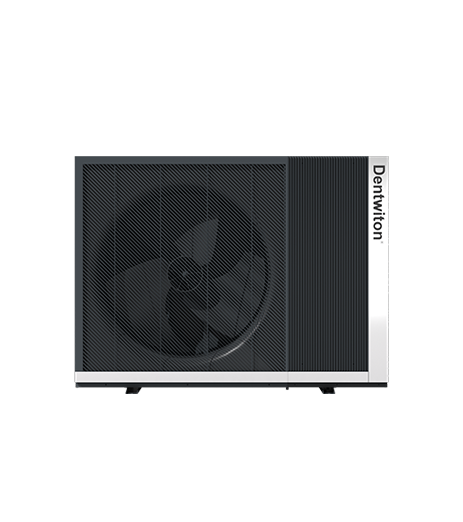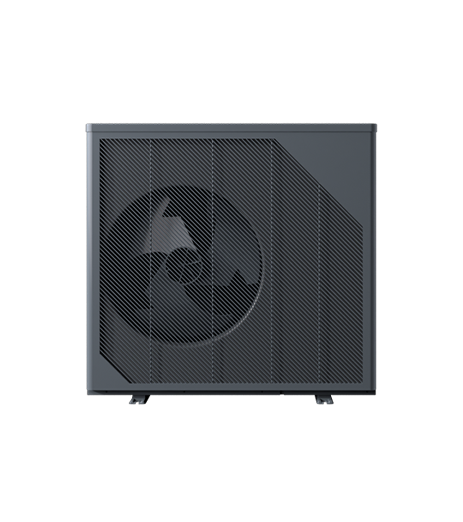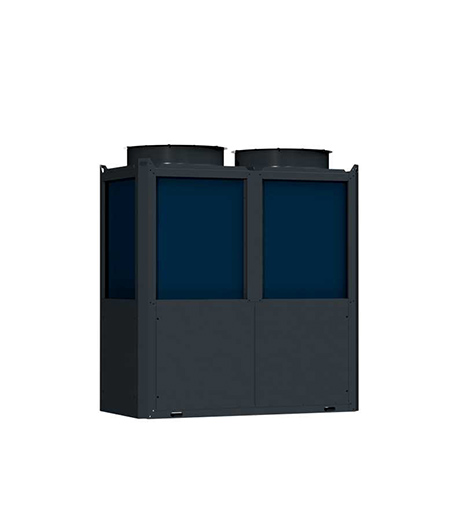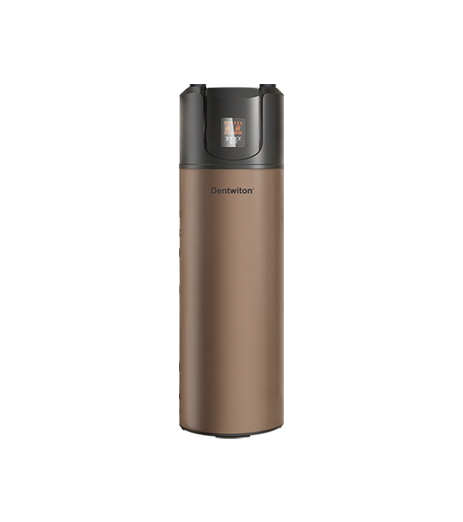
You may know that there are different types of heat pumps. They are classified according to their function and the source of heat absorption. The most well-known and common type of heat pump is the air source heat pump (ASHP).
These electrical devices absorb heat from the outside air. They then transfer that heat indoors, providing heating and hot water for your home.
ASHPs can also provide cooling. They do this by transferring heat from one location to another. This means they absorb heat from the indoor air and then expel it outdoors.
Many (but not all) modern (but not all) ASHPs can provide cooling for homes. They remove heat from the indoor air, making the indoor air cooler.
ASHP (sometimes called an air-to-water heat pump) consists of several main components. These components work together to provide efficient heating and cooling. Specifically:
Depending on the system type, an ASHP can have outdoor and indoor units. The main function of the outdoor unit is to capture heat from the air. It consists of a heat exchanger and a compressor. These play a fundamental role in the absorption and compression of ambient heat. Here, ambient heat refers to the heat in the air layer near the ground.
This means that outdoor heat is introduced into the heat exchanger, also known as the evaporator.
It allows heat transfer between the outside air and the refrigerant.
There is also a second heat exchanger called the condenser. If you have a standalone heat pump, the condenser can also be found in the outdoor unit. The purpose of the condenser is to transfer the heat from the refrigerant to the water loop. It then provides heating and hot water for the space.
If you have a split system, the condenser is located in the indoor unit of the unit. Read on to learn more about split and standalone heat pumps.
In your home, the indoor unit is responsible for distributing the heat or cooling generated by the system.
Typically, it might be one of the following:
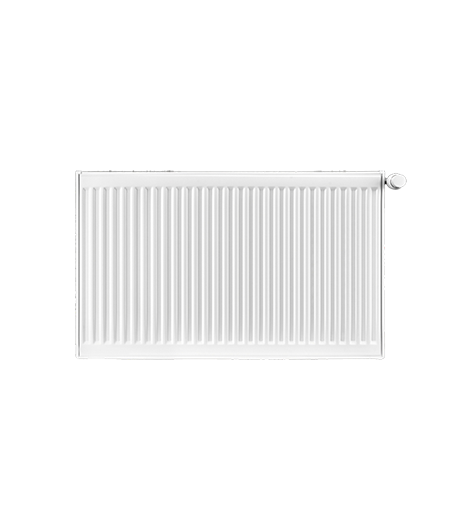
●Radiator
●Underfloor heating
●Ducted air distribution system
The refrigerant piping is a set of insulated copper pipes. It is designed to transport refrigerant between the outdoor and indoor units of the heat pump.
It plays a crucial role in the heat transfer process throughout the system.
The reverse valve is also a key component of ASHPs. It provides cooling in the summer by reversing the direction of refrigerant flow.
In other words, it allows the heat pump to switch between heating and cooling modes. Many ASHP models are equipped with a four-way reverse valve.
The expansion valve regulates the refrigerant flow, ensuring smooth operation of the heat pump. It also helps maintain the performance and efficiency of the ASHP.
As you can see, heat naturally flows from warmer areas to colder areas. To provide heating, ASHPs reverse this process using electricity. It achieves this through a refrigeration cycle, thus using refrigerant. It is the medium through which heat is transferred from one stage to another.
Heat energy in the outside air is captured in the evaporator. Even if it's colder outside, it transfers to the refrigerant. Even with a lower outside temperature, it still contains enough heat to extract from the air.
The compressor then compresses the refrigerant. Therefore, the refrigerant's temperature rises.
The compressed, high-temperature refrigerant turns into a gas and enters the condenser. Here, the heat of the gaseous refrigerant is transferred to the water.
The gaseous refrigerant cools as it releases heat in the condenser and expansion valve. The gas then turns back into a liquid. This process repeats, ultimately providing heat and hot water.

Besides heating, ASHPs typically provide cooling via a four-way reversing valve.
This changes the direction of refrigerant flow. This allows the system to absorb heat from the indoor space. It then rejects it from the outside. Ultimately, it cools the water in the circulating system. This water can then be used for space cooling.
When the reversing valve activates the cooling mode, the "condenser" acts as an evaporator. It absorbs heat from the connected water circulation, causing the refrigerant to evaporate. In the "evaporator," the refrigerant condenses and dissipates the heat to the outside.
ASHPs come in several types, as follows:
Air-to-air heat pumps are essentially classified as a variant of air conditioning. They can both cool and heat your living space. However, they lack hot water supply. Air-to-air heat pumps are most common in various countries and regions, such as the United States. They are also found in many European countries, such as France, Portugal, Spain, and Italy.
Another type of air source heat pump is the air-to-water heat pump. They absorb heat (even from cold) from the outside air and transfer it to water. The heat is then distributed to different emitters, such as:
●Radiators,
●Underfloor heating,
●Hot water tanks,
●Fan coil units.
Their purpose is to provide heating, hot water, and optional cooling. This type of heat pump system is more common in Europe, including Poland, Germany, Finland, and Norway.
Essentially, there are two types of air-to-water heat pumps. These include:
This variant of air-to-water heat pump consists of a single heat pump. It is located outside your home. It consists of an outdoor unit containing:
●Heat exchanger,
●Compressor,
●Water portion of the cooling cycle.
Single-unit systems are cheaper and faster to install than multi-unit systems.They take up less space in your home.
Split-unit heat pumps differ from single-unit heat pumps.
Split systems separate the components of the indoor and outdoor units. Additionally, two copper pipes are used for refrigerant transfer between the indoor and outdoor units.
Air source heating and cooling offers several significant benefits, including:
ASHPs (especially air-to-water heat pumps) are integrated units. This means they can meet a home's heating, hot water, and cooling needs.
This is also a clear long-term solution for managing the temperature requirements of living spaces. This is why they are favored for residential and commercial use.
AHPs only require electricity to deliver heat. They do not require fuels such as oil, natural gas, or wood. This means that heat pumps emit far less CO2 than gas boilers. This can significantly reduce greenhouse gas emissions. This makes heat pumps both sustainable and environmentally friendly.According to the European Heat Pump Association, heat pumps can reduce CO2 emissions by more than 9 million tons within the EU alone. Furthermore, they can reduce CO2 emissions by 35%-65% compared to gas boilers.
By using ASHP heat pumps, you can get rid of the burden of gasoline or oil delivery. It also helps you avoid future fuel price increases. There's no need to worry about restrictions and future fuel bans. This makes this HVAC system competitive in the future.
Essentially, ASHPs can provide 3-4 kilowatts of renewable heat from the air. This is calculated per kilowatt of electricity. Their operation ratio is 30% electricity and 70% renewable energy, namely air. This makes their energy efficiency approximately 300% to 400%.
This is a significant improvement compared to traditional heating systems such as gas boilers. Heat pumps also consume less electricity than electric heaters, helping to reduce energy costs.
Heat pump technology is time-tested and reliable. Therefore, ASHPs have low maintenance costs. Only a few parts need to be checked. Furthermore, their cost is relatively low. In contrast, boilers typically require regular cleaning and have higher maintenance costs.
ASHPs (especially air-to-water heat pumps) can work effectively in cold climates.
These heat pumps can operate efficiently at temperatures as low as -10°C. At -20°C, some ASHPs still have an efficiency exceeding 200%.
Therefore, it is recommended to choose a heat pump model primarily designed for cold climates. This is possible because the external heat absorbed by these systems remains even in cold weather. They then bring it indoors.
As you may know, many European countries, such as Finland, Sweden, and Norway, experience harsh winters. Therefore, they widely use ASHPs.
The lifespan of an ASHP is generally between 15 and 20 years. With proper maintenance, some ASHPs can even last longer, up to 25 years. The quality and condition of the heat pump primarily affect this.
Inspecting and maintaining the heat pump annually can extend its lifespan.
ASHPs are undoubtedly environmentally friendly. A major advantage of investing in ASHPs is their extremely low carbon footprint. They are a low-carbon way to cool and heat a home. Therefore, they significantly contribute to reducing carbon emissions.
ASHPs only require electricity to deliver heat. They do not require fuels like engine oil, wood, or gasoline. Furthermore, ASHPs use renewable energy from the air, making them clean and environmentally friendly.
Heat pumps offer numerous advantages over traditional heating systems like boilers. Unlike boilers that generate heat by burning gas, they transfer heat from the outside air to the indoor air and vice versa. This makes them highly energy-efficient, sustainable, and environmentally friendly. It also leads to significant long-term savings on water and electricity bills.
Several important conditions must be considered when installing an ASHP to ensure energy efficiency and optimal performance. These include:
●Determining a suitable location for the outdoor unit with sufficient space. It should be unobstructed and allow for fresh air intake.
●A sufficient power supply is required for the heat pump to operate.
●Your home should be well-insulated to maximize the heat pump's efficiency.
●Assess the climate conditions of your area to determine the size of the ASHP. This is based on your heating and cooling needs.
●An existing piping system should be in place to connect the heat pump. This is for providing hot water.
●Heat pump installation must be performed by an experienced professional technician. This is to ensure proper refrigerant handling and proportions, and compliance with local regulations.●Ensure your ASHP system has a full warranty and excellent after-sales service.
Regular and proper maintenance by professionals ensures optimal operation and lifespan for your ASHP. The average annual cost of heat pump maintenance is between €150 and €300. Considering the benefits you receive, this is generally not high.
However, the cost may vary depending on the type of ASHP and the maintenance contract offered by your heating technician.
We hope this article has provided you with a wealth of information about ASHP.
We have covered all aspects of these evolving HVAC systems, from how they work to their types and advantages. You have also gained a deeper understanding of the most important components of this type of heat pump.
Indeed, you should be able to enjoy the benefits of ASHP immediately after installation. They provide comfort to your home year-round, reduce energy bills, and have low maintenance costs.
 Add:8F, Xinghe Business Tower, 89 Jiefang Road, Hangzhou, Zhejiang, China




Copyright © 2026 Dentwiton. All rights reserved. 浙ICP备2025219677号