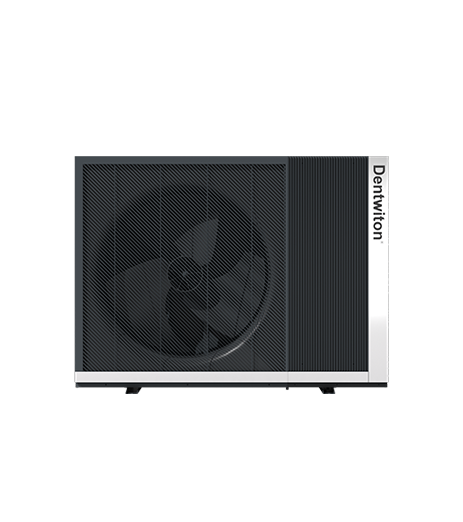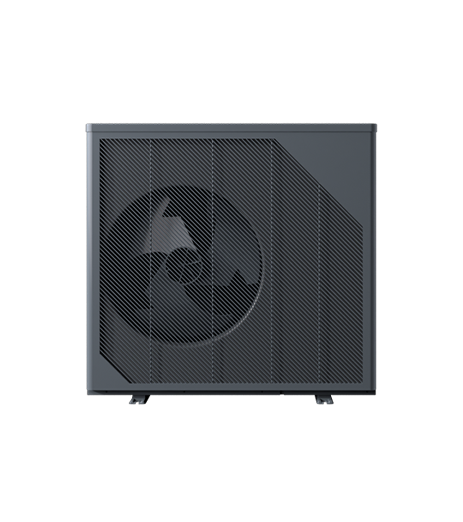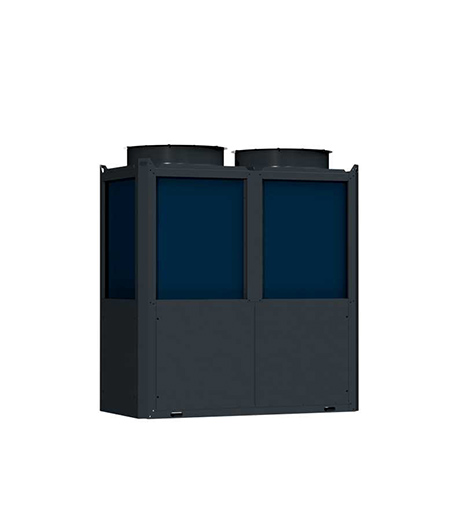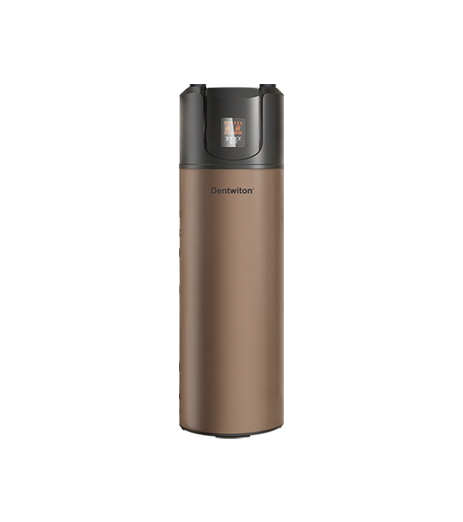
As you can see, R290 is a hydrocarbon-based refrigerant, specifically called propane. It is used in various heating and cooling applications, including refrigeration systems, air conditioning, and heat pumps.
R290 has a low Global Warming Potential (GWP) of 3, significantly lower than the standard of 150. This makes R290 an environmentally friendly alternative to many other refrigerants, such as R410A and R22. Furthermore, R290 has a high latent heat of vaporization. This means it absorbs a considerable amount of heat during evaporation, making it a more efficient refrigerant.
Note that while R290 has low toxicity, it is a highly flammable refrigerant. Specific safety measures are required during installation, maintenance, and handling to prevent fires.
Nevertheless, R290 remains a versatile refrigerant due to its higher efficiency and lower environmental impact. R290 heat pumps use R290 refrigerant.
Similar to R290, R32 is simply a refrigerant. It is commonly used in heat pumps and air conditioning systems. It is based on hydrofluorocarbons, meaning it is chlorine-free. More specifically, it is also known as difluoromethane.
R32 has a Global Warming Potential (GWP) rating of 675. This is significantly lower than many refrigerants used in the past. R32 also has a lower ODP (Ozone Depletion Potential).
R32 is more energy efficient than some other refrigerants. This helps reduce operating costs over the system's lifespan.
You can see that R32 is non-flammable. However, it may be slightly toxic if inhaled in large quantities. It is the preferred choice for heat pumps and air conditioning systems worldwide. This is because of its higher energy efficiency and lower environmental impact.
You may see R32 in the name of an air source heat pump. That refers to the R32 refrigerant they use.

R290 and R32 refrigerants endow heat pumps with unique characteristics. This is reflected in the differences between them.
The main differences between R290 and R32 heat pumps are as follows:
You may know that these two heat pumps use different refrigerants. R290 has a lower Global Warming Potential (GWP) and Ozone Depletion Potential (ODP) than R32.
The R290 refrigerant has a GWP rating of 3 and an ODP rating of 0. R32 has a GWP of 675 and an ODP of 0.
R32 exhibits a greater volumetric heat dissipation capacity than R290. This means that R32 heat pumps are more efficient. This refers to the cooling power per unit volume of the refrigerant.
R32 has a cooling capacity per unit volume that is nearly 87% higher than R290.
Therefore, R290 heat pump systems require larger displacement compressors. This is to maintain the same heat dissipation load.
A study on the efficiency of R290 and R32 heat pumps was conducted in Europe.
The study found that at 35°C:
The Seasonal Coefficient of Performance (SCOP) rating for the R32 model is 4.72.
This means that the R290 heat pump will be 21% more efficient.
At 55°C, the results showed:
This means that the R290 heat pump is approximately 34% more efficient at the same temperature.
From a safety perspective, R32 is non-flammable. However, it may be slightly toxic if inhaled in large quantities. Conversely, R290 is a flammable refrigerant. Therefore, the installation and maintenance of R290 heat pumps require safe procedures.
Therefore, ensure your preferred heat pump is configured for optimal safety.
R290 heat pumps have a higher COP rating than R32 heat pumps at lower outdoor temperatures.
This makes them ideal for cold climates.
Take Dentwiton's Ultimate Silence series R290 air-source inverter heat pump as an example. Its SCOP significantly exceeds 5.32. Furthermore, it has a wide ambient temperature range, from -28°C to 40°C.
In contrast, R32 heat pumps perform better at higher outdoor temperatures.
R290 heat pumps typically consume more energy to provide the same heating/cooling effect as R32. This means that over time, it may offset the environmental advantages of its smaller total area.
This also means that heat pumps equipped with R32 require lower operating costs. This may offset the higher initial cost of heat pump systems.
R32 is more widely used in heat pumps than R290. Therefore, heat pumps containing R32 refrigerant may be more readily available. Replacement parts for R32 heat pumps may also be more readily available than those for R290.
Generally, R290 heat pumps may be slightly more expensive than R32 heat pumps. This is because R290 heat pumps may require higher safety standards when dealing with the flammability of propane. This can increase the manufacturing and installation costs of R290 heat pumps.
Specific pricing for particular models depends on the heat pump manufacturer and size.
You can see that R32 heat pumps are generally quieter than R290 heat pumps. This is because they operate at lower pressures and run more smoothly. Therefore, noise levels can be a concern in residential areas, and this difference can be significant.
As mentioned earlier, R290 refrigerant is favored for its minimal environmental impact compared to R32. This is because its overall operating efficiency is much lower than that of R32 refrigerant.
R32 represents a significant improvement over older refrigerants in several aspects. It can also be considered environmentally friendly.
However, R290 can contribute to smog formation by leaking into the atmosphere. R32, being a hydrofluorocarbon, could contribute to global warming if released into the atmosphere.
The choice between R290 and R32 heat pump systems depends on several factors.
When choosing either, consider the following:

R290 heat pumps are a good choice for cooling/heating in the following situations:
Ideally suited for cold climates: You may live in a cold climate like Northern Europe.
In this case, R290 heat pumps are a better choice because propane (R290) has superior thermal conductivity. This is due to its lower boiling point and higher latent heat of vaporization. This allows for effective heating even when the outside temperature is very low.
Environmentally friendly: As mentioned earlier, R290 has a very low total operating cost of only 3. This makes it a worthwhile choice for environmentally friendly cooling/heating. Furthermore, it is non-toxic and non-corrosive, making it relatively safe and reliable.
Retrofitting existing systems: R290 refrigerant can be used to retrofit existing refrigeration systems that use other refrigerants. This saves energy and reduces environmental impact without replacing the entire system.
Suitable for commercial and residential applications: R290 heat pumps can be used in residential and commercial applications, such as homes and offices.
They provide effective cooling/heating with minimal environmental impact. Dentwiton's R290 commercial air source heat pump is a suitable choice in this regard.
R32 is undoubtedly the most widely used refrigerant in European heat pumps. This is due to its higher energy efficiency, lower environmental impact, and compliance with current regulations.
R290 heat pumps are a good choice for cooling/heating in the following situations:
●Energy Efficiency:In recent years, R32 refrigerant has gained widespread acclaim for its high energy efficiency. This results in improved heat pump performance, especially in residential and commercial applications. It also means lower electricity bills and a reduced carbon footprint.
●Wide Availability: R32 heat pumps are widely available in Europe. This makes these systems a convenient and suitable option.
●Suitable for Humid and Warm Climates: R32 heat pumps are better suited for humid and warm climates. These systems may perform better when long-term heating/cooling is required. This makes R32 heat pumps more popular in Southern Europe.
●Enhanced Safety:R32 is classified as an A2L refrigerant. This means that the refrigerant has low flammability, low toxicity, and does not deplete the ozone layer. Therefore, it is considered suitable for use in cooling and heating systems.
●Compliance:
R32 complies with current refrigerant regulations, such as the EU's F-Gas Regulation.
This program aims to phase out more GWP refrigerants. R32 has a total operating point of 675, which is lower than older refrigerants such as R410A (total operating efficiency of 2088).
Choosing the right refrigerant for your heat pump is a fundamental decision. It plays a crucial role in all aspects of a heat pump system.
You now know that R290 and R32 refrigerants have unique characteristics and applications. R290 heat pumps are known for their environmental friendliness and superior performance, especially in cold climates. R32 heat pumps are known for their wide availability, higher safety, and lower price.
For this, it is best to consult a Dentwiton professional technician. This will help you choose the heat pump best suited for your refrigerant.
 Add:8F, Xinghe Business Tower, 89 Jiefang Road, Hangzhou, Zhejiang, China




Copyright © 2026 Dentwiton. All rights reserved. 浙ICP备2025219677号