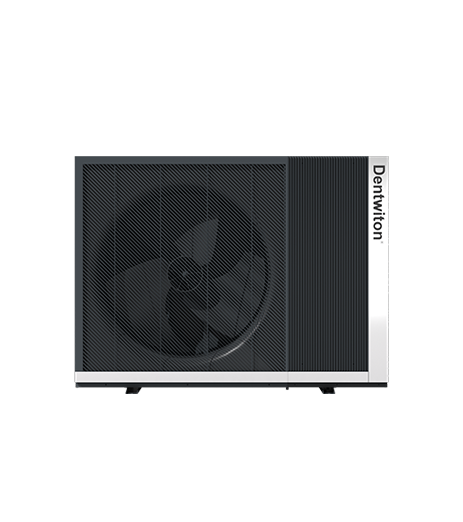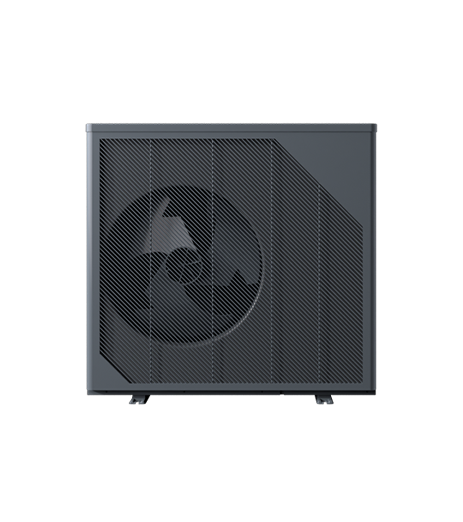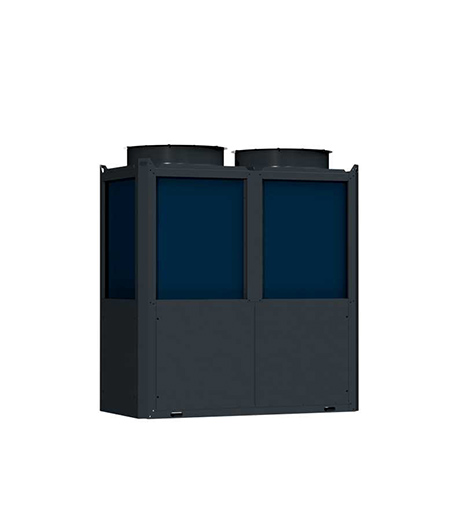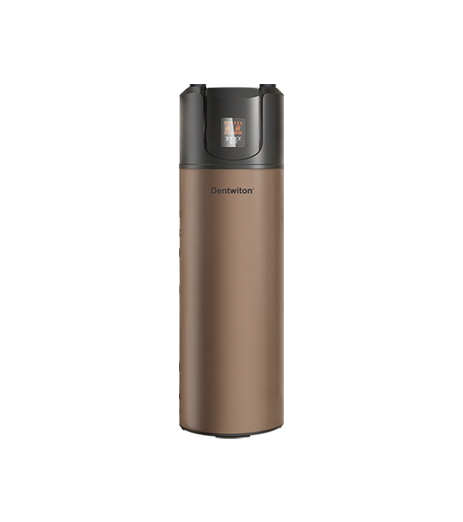
Here, we will delve into the meaning, advantages, and disadvantages of each type of heat pump. We will further clarify the main differences between these two types of heat pumps.
Finally, we will provide valuable advice to help you choose the right heat pump.This is to precisely meet the needs of your home or business.
Let's begin.
As the name suggests, single-phase heat pumps use a single power supply line.These appliances operate on standard household electrical systems.
These systems typically provide 120 to 240 volts of AC power.Therefore, this type of heating system is commonly used in small homes and light commercial applications.
Furthermore, single-phase heat pumps are simpler to install and generally cost less than three-phase heat pumps.
The following are the key advantages of single-phase heat pumps:
Such heat pump systems feature simple installation, requiring less complex electrical wiring. This saves both installation time and costs.
Compared to three-phase units, single-phase heat pumps are more economical, making them a highly sought-after choice—especially for budget-conscious consumers.
These systems are widely accessible, ensuring easy access for homeowners and small businesses alike.
The following are the main drawbacks of single-phase heat pumps:
Single-phase heat pumps may be less efficient than three-phase systems, leading to higher energy consumption and increased operational costs over time.
Compared to three-phase counterparts, single-phase heat pumps have lower power capacity, which restricts their performance in scenarios with high heating/cooling demands or large buildings.
The single-phase motors in these heat pumps experience more wear and tear due to higher electrical currents, resulting in more frequent maintenance and servicing requirements.
As the name suggests, three-phase heat pumps require a three-phase power supply. Consequently, properties equipped with such systems have three electrical wires connected.
The load is evenly distributed across the three power lines. In other words, a three-phase electrical system delivers three alternating currents that are uniformly timed.
This configuration ensures superior performance and greater power output.
The following are the core advantages of three-phase heat pumps:
Three-phase heat pump systems offer significantly greater power capacity than single-phase units. This enables them to efficiently heat or cool large spaces and meet growing heating/cooling demands.
Equipped with three-phase motors specifically designed to handle higher electrical currents, these heat pumps are more durable and resistant to wear and tear.
These heat pump systems are typically more energy efficient than single-phase ones. That’s owing to their capability to deal with larger loads. That results in a substantial lowering of costs over time.
Such units swiftly adapt to fluctuating weather conditions. This is owing to the varying-speed mechanism that quickens the cooling/heating process. That’s when the thermostat recognizes a substantial temperature shift.
Such units also encompass an alternate or secondary heating system (if needed). That ascertains there’s no needless energy usage.
Very often, the compressor and blower of such systems function at diminished speeds. That’s to achieve and maintain the fitting temperature in your room.
Accordingly, such systems use less electricity by a factor of two or three. Operating at reduced speeds helps lessen the appliance’s wear and tear, which leads to a longer lifespan. It also leads to fewer occurrences of malfunctioning or breakdown due to worn-out parts.
Compared to older versions, the latest three-phase units have excellent safety features.
Commercial three-phase units are reliable heating/cooling solutions that require minimal maintenance.
Three-phase heat pumps come with their share of disadvantages. The following are some notable ones:
Such heat pumps are generally pricier than single-phase systems. This is owing to their increased complexity and greater capacity.
Such systems may not be widely available compared to single-phase devices. This is especially true for households with more prevalent 1-phase heat pumps.
The installation of the aforementioned heat pumps necessitates particular knowledge and equipment. That can raise the overall installation time and expenses.
Undeniably, there exist varied differences between one-phase and three-phase heat pumps. These are as follows:
Typically, smaller heat pumps require a single-phase power supply. In contrast, bigger heat pump models generally use a three-phase power supply. Yet the former are ideal for a power capacity of up to 35kW.
When switched on, single-phase heat pumps typically have a substantial electricity uptake. That’s one of the frequent problems such appliances face. In certain households, such units can necessitate more than 20% of the electricity panel’s capacity.
On the contrary, that’s not an issue with three-phase heat pumps. They don’t need as much power to commence a heating or cooling cycle. That results in diminishing expenses when it comes to utility bills.
As is evident, single-phase units are typically more compact. That’s because they are fabricated for household usage.
On the other hand, 3-phase heat pumps are, for the most part, large-sized. They find more industrial and commercial applications. Yet with rapid technological advancements, three-phase systems are gaining more popularity for household usage.
In contrast, operating larger heat pumps on single-phase electricity results in varying problems. For example, compressor motors can have increased starting currents. That can lead to the lights flickering. It can further malfunction the electrical appliances that share a power outlet with your heat pump.
As you see, single-phase heat pumps utilize 220 to 240 volts. They count on one live wire and the second neutral wire.
Conversely, a three-phase heat pump functions on 380 to 415 volts. They rely on three live wires and sometimes a neutral wire.
As stated before, single-phase heat pumps are generally cheaper in terms of installation and setup costs. Some are compact, so their installation is much easier and less pricey.
Such heat pumps further necessitate less intricate electrical wiring. That diminishes both installation and setup time and expenses.
On the other hand, three-phase heat pumps involve more installation and setup expenses. That’s because it requires specialized equipment and knowledge.
Three-phase heat pumps lead in efficiency and running expenses. These appliances can handle larger loads, making them more energy efficient.
In turn, that brings about a substantial lessening of cost over time. These systems can furthermore meet elevated demands and perform heating/cooling efficiently.
In contrast, single-phase heat pumps may not be as efficient as three-phase systems. This can result in greater energy consumption and higher operating expenses over time.
That doesn’t mean such single-phase systems won’t lessen your energy bills. They do, but not to the extent of the three-phase heat pump.
As you know now, single-phase and three-phase heat pumps are distinct. Each heat pump variant has its share of pros and cons.
Selecting the fitting heat pump system for your cooling/heating relies on various factors. Some of these encompass:
Single-phase units are easier and more cost-efficient to install. Yet they are more suitable for households. Such devices aren’t suitable for larger buildings or areas with elevated heating and cooling demands.
You can opt for three-phase heat pumps if you need:
Such heat pumps are typically more expensive and can have more installation hurdles.
The intended target market of both these heat pumps is also paramount. That plays a decisive role in the heat pump installation.
Most households in the United Kingdom (UK) are supplied with single-phase electricity. In contrast, most of the rest of Europe has a three-phase electricity supply.
That can affect the suitability and availability of heat pumps for the UK and the rest of Europe. Thus, heat pumps fabricated for the European market may typically not suit the UK domestic supply.
Single-phase and three-phase are two categories of heat pumps based on the electricity they consume. The former employs a single-phase electricity supply while the latter uses a three-phase one.
For the most part, single-phase devices are economical, compactly sized, and intended for household usage.
Their three-phase counterparts are more costly and are typically used for commercial applications. Generally, such three-phase units are more efficient than single-phase ones. However, with the advancement of the latest technologies, three-phase systems are increasingly being adopted for residential use.
When choosing a heat pump for your home or business, carefully consider various factors. These may include the electrical infrastructure in your area, your budget, and your specific heating/cooling needs.
You can then make an informed decision (e.g., selecting a single-phase or three-phase air-source heat pump).
 Add:8F, Xinghe Business Tower, 89 Jiefang Road, Hangzhou, Zhejiang, China




Copyright © 2026 Dentwiton. All rights reserved. 浙ICP备2025219677号