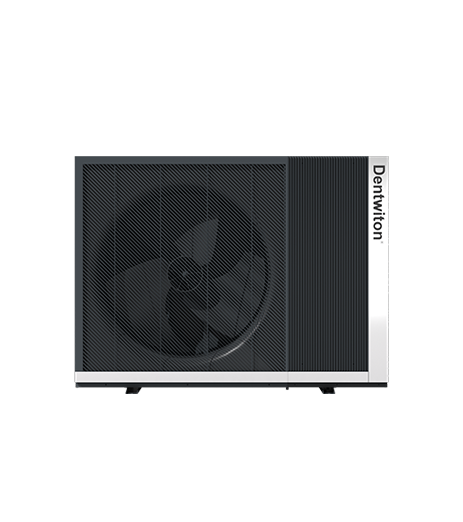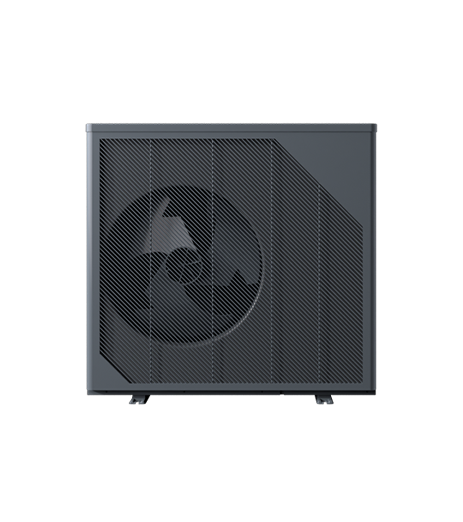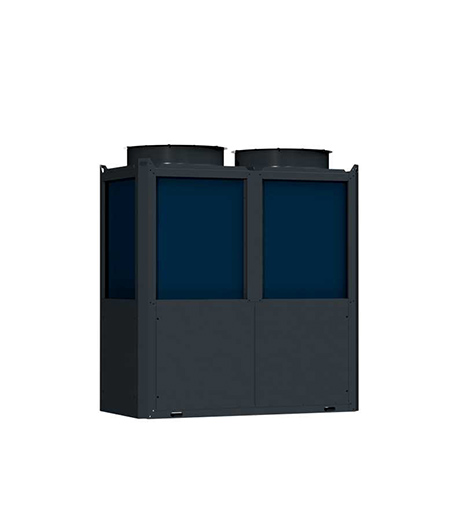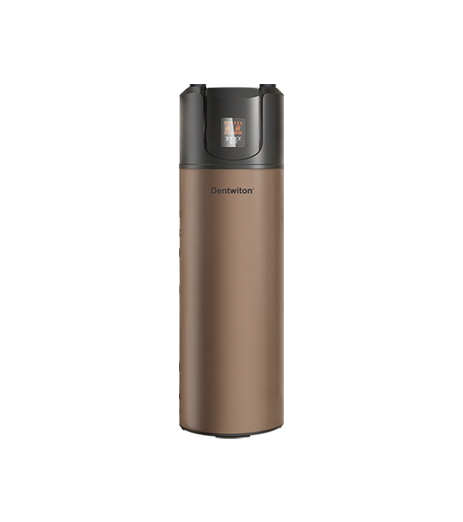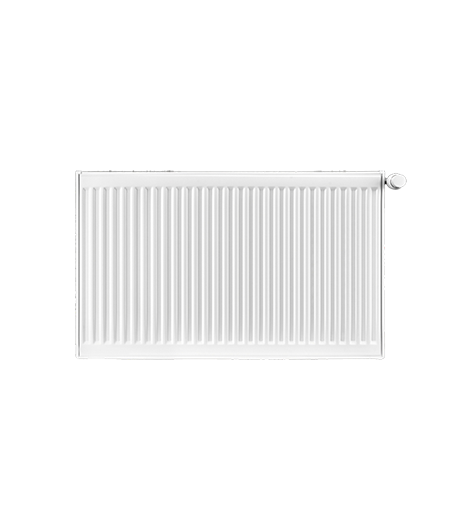
A heat pump is an appliance.They operate by pumping heat energy from one location to another.This energy is used for heating, cooling, and hot water supply.
Heat pumps operate through a cooling cycle.These devices extract heat from a low-temperature source using a refrigerant.This refrigerant is then compressed to raise its temperature.
The heated refrigerant then transfers the heat to the room through a heat exchanger.It is then cooled, and the process is repeated. This helps to effectively maintain indoor temperatures.
These systems do not produce heat energy;they simply extract and move it.This makes them extremely efficient.
Generally, there are three main types of heat pumps:
●Water Source Heat Pumps
●Ground Source Heat Pumps
These systems function similarly, but their heat sources differ.These systems work by absorbing heat energy from the outside air, water, or ground, respectively.
Your home may currently be heated using fossil fuels such as oil or natural gas.
After installing such a device, you will no longer need to use these fuels. Therefore, you can save money because there will be less fuel cost.
Heat pumps have a smaller carbon footprint by efficiently converting energy into heat.
This helps to significantly reduce carbon emissions.
These devices are more efficient than traditional heating systems.
Heat pumps have a lifespan of over 20 years, making them a long-term, reliable heating solution.
While heat pumps offer long-term savings, the initial investment is higher.
Cold weather conditions reduce the efficiency of air-source heat pumps.
Ground-source types are less affected by severe cold weather.
Installing such devices can be a complex and time-consuming process.
This may require digging trenches or repaving pipes.
Heat pumps do require electricity to operate.
In the UK, for example, electricity prices are 3-4 times higher than natural gas.
Gas boilers are a widely popular heating system.
They use natural gas to heat hot water for hot water supply and central heating.
This type of system is one of the most common methods of home heating.Specifically, in the UK, most of the grid is connected to the National Gas Network.
They transfer heat to water by burning gas.This heat is then circulated through underfloor heating or radiators.
Gas boilers operate through controlled combustion.It converts gas into heat energy through an efficient system.A gas-fired boiler operates using several components.
In the combustion chamber of the boiler, natural gas is ignited, generating heat.This heat is then used to heat water within a heat exchanger. Here, a thermostat plays a crucial role in temperature regulation.
The water is then heated to a suitable temperature.Afterward, the water flows through pipes to radiators throughout the house. These radiators then heat the rooms.
The cooled water then returns to the gas-fired boiler, where it is reheated.This completes the cycle.
Generally, gas-fired boilers can be categorized into the following types:
Condensing boilers: These are more efficient and cost-effective than non-condensing boilers.
Furthermore, they can achieve efficiencies exceeding 90%.
The table below compares the differences between heat pumps and gas boilers on different pivot characteristics:
| Characteristic | Heat pump | Gas boiler |
| Cost | Prices range from £4,000 to £15,000 | Between £500 and £3,500 |
| Efficiency | Approximately 350-450% | Approximately 95% |
| Carbon emissions | Low (approximately 850 kg of carbon dioxide per year) | High (approximately 2,500 kg of carbon dioxide emissions per year) |
| Installation | Typically, one week | Usually, one day |
| Maintenance | Maintenance requirements are low (usually only once every 3 to 5 years). | It typically requires annual maintenance. |
| Lifespan | More than 20 years | 10-15 years old |
| Policy | The UK government offers a subsidy of up to $7,500 for heat pump installations; this is achieved through a boiler upgrade scheme. | The UK has reversed its plan to phase out gas-fired boilers by 2035; it remains unclear whether such systems will be phased out in the future. |
| Applicable Scenarios | Generally, it provides cooling, heating, and hot water. | Provide heating and hot water |
Regarding upfront costs, gas boilers are more economical than heat pumps.The latter are also faster and easier to install.
According to GreenMatch, the approximate cost of a heat pump in the UK is between £4,000 and £15,000.In contrast, the total upfront cost of a gas boiler is between £500 and £3,500.
In terms of operating costs, heat pumps have the upper hand compared to boilers.This is because heat pumps are more energy efficient.
The energy costs of heat pumps are generally lower than those of gas boilers.This makes heat pump systems more cost-effective in the long run.
However, electricity is more expensive than petrol, especially in the UK.You should also consider this.
You can compare heat pumps and gas boilers to determine which is better.Here, a heat pump is an ideal choice. This is because it is highly efficient and can be used for heating, cooling, and hot water.
It has a longer lifespan, lower operating costs, and emits less CO2 when operating.This makes it both economical and environmentally friendly in the long run.
You should strongly consider replacing fossil fuel-based systems, such as boilers, with heat pumps. Doing so will bring you the following benefits:
You reduce your carbon footprint and your reliance on finite fossil fuels like natural gas.
You enjoy year-round comfort.
This is because many heat pumps provide both cooling and heating, as well as hot water.
Here are some reasons why air source heat pumps have higher operating costs:
●Insufficient maintenance
Heat pumps are generally more environmentally friendly than gas boilers.
In this regard, it is crucial to consider the carbon emissions of both systems.According to WhatCost, a gas boiler emits approximately 2,500 kg of CO2 per year.In contrast, a heat pump emits approximately 850 kg of CO2 per year.
Fundamentally, heat pumps and gas boilers function the same way.They utilize energy to provide hot water and heating year-round. Their difference lies in how they perform these tasks.
When comparing heat pumps and boilers and choosing one, several factors must be considered.In short, these can include:
●Your home situation
●Budget
●Installation time and complexity
●Environmental protection goals
You may already be ready to invest in a heat pump.
Then you can certainly take full advantage of its benefits in the coming years.
 Add:8F, Xinghe Business Tower, 89 Jiefang Road, Hangzhou, Zhejiang, China




Copyright © 2026 Dentwiton. All rights reserved. 浙ICP备2025219677号