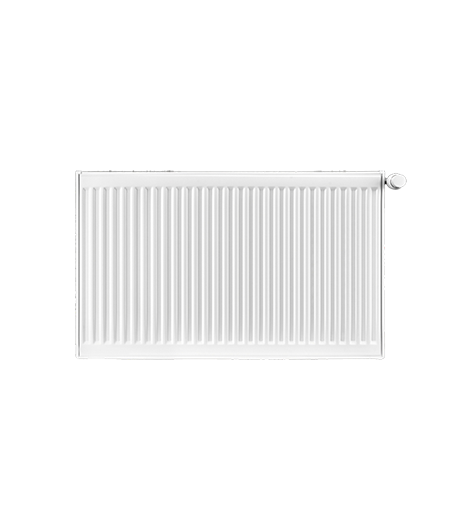
A buffer tank plays a critical role in residential heat pump systems by increasing system water volume and stabilizing operation, especially in inverter-driven systems.
Reduces frequent on/off cycling
Improves temperature stability
Supports defrost operation
Protects the compressor under partial-load conditions
A commonly used rule of thumb for residential systems is:
Buffer tank volume (L) = 10–20 L per kW of heat pump capacity;
Floor heating systems: lower end of the range
Radiator systems: higher end of the range
Systems with multiple zones: often require larger volumes
Proper buffer tank sizing ensures smooth operation without unnecessary energy loss or oversized system components.
The expansion vessel compensates for water volume changes caused by temperature fluctuations within the heating system.
Typically installed on the return water side
Positioned close to the heat pump or hydraulic module
Installed upstream of the circulation pump for stable pressure control
The expansion vessel size depends on:
Total system water volume
Operating temperature range
System static pressure
For residential systems, expansion vessel volume is often selected as:
Expansion vessel volume ≈ 8–12% of total system water volume
Correct sizing and positioning help prevent pressure fluctuations, safety valve discharge, and long-term system stress.
Residential heat pump systems often use multiple circulation pumps, each serving a different function within the system.
Heat pump primary circulation pump
Heating distribution pump (floor heating / radiators)
Domestic hot water circulation pump
Flow rate: matched to heat pump capacity and temperature difference
Head (lifting pressure): determined by pipe length, fittings, and system resistance
Pump type: high-efficiency ECM pumps are recommended for variable-load systems
A properly selected circulation pump ensures:
Stable heat transfer
Low electrical consumption
Quiet operation
Balanced flow distribution across heating zones
The auxiliary electric heater is designed as a supporting component, not the primary heat source.
Backup heating during extreme low outdoor temperatures
Support during defrost cycles
Supplementary heating during system startup
For residential heat pump systems:
Auxiliary heater capacity = 20–40% of heat pump heating capacity
Oversized electric heaters increase operating cost, while undersized heaters may fail to provide sufficient backup under extreme conditions. Correct sizing ensures reliability without compromising system efficiency.
Each installation component plays a specific role, but true system performance is achieved only when all components are correctly matched.
Proper selection of buffer tanks, expansion vessels, circulation pumps, and auxiliary heaters leads to:
Higher seasonal efficiency (SCOP)
Reduced wear on key components
Improved comfort stability
Lower maintenance and service costs
In residential heat pump systems, the heat pump unit is only part of the solution. Thoughtful selection of installation components transforms individual devices into a well-balanced heating system, ensuring efficient, stable, and reliable operation throughout the entire lifecycle.
 Add:8F, Xinghe Business Tower, 89 Jiefang Road, Hangzhou, Zhejiang, China




Copyright © 2026 Dentwiton. All rights reserved. 浙ICP备2025219677号