-
Why is it important to size a heat pump correctly?
Air source heat pumps must be correctly sized so that they can deliver the required heat output at design conditions, typically when the outdoor temperature is -3 °C. The installer must first determine the building's heat loss accurately, then select the correct heat pump capacity for the design outdoor temperature. Dentwiton can assist with both the heat loss calculation and the model selection.
-
What is R290 refrigerant?
R290 is a natural refrigerant — a hydrocarbon better known as propane. It has a very low global warming potential (GWP 3, compared with 2,088 for R410A) and excellent thermodynamic properties.
Because R290 is classified as A3 (flammable), it is not a drop-in replacement: units using it require dedicated safety design, including sealed refrigerant circuits, charge limits and leak detection. That engineering discipline is where manufacturing quality shows, and it is why R290 air-to-water heat pumps are increasingly specified for new residential projects in Europe.
-
How do I know that a heat pump is efficient?
SCOP is one of the most important metrics: it shows how efficiently a heat pump performs over a full year under real conditions, expressed as kWh of heat delivered per kWh of electricity consumed. Depending on the model and the system it is installed in, SCOP typically falls between 3.0 and 6.
A second metric is COP (Coefficient of Performance), measured under laboratory conditions and covering the heat pump alone. Efficient heat pumps generally achieve a COP between 3 and 5. Below 3, a heat pump is usually not economic to run.
-
How do air source heat pumps work?
There are two types: air-to-air and air-to-water. Dentwiton heat pumps use the air-to-water principle, transferring heat captured from the outdoor air to radiators or underfloor heating in a wet heating system.
The process uses the same vapour-compression cycle as a domestic refrigerator. A refrigerant with a low boiling point is exposed to outdoor air in an evaporator, where the liquid boils and absorbs latent heat from the air. The gas is then compressed, raising its heat content, before passing through a heat exchanger where it condenses back to liquid while transferring heat to the heating circuit water. The liquid refrigerant is then recirculated through the evaporator and the cycle repeats.
-
What is a heat pump?
A heat pump uses thermodynamic principles to absorb energy from the surrounding environment and convert it into usable heat for a building's heating and hot water.
-
Is a heat pump worthwhile for every building?
Heat pumps are suitable not only for new buildings but also as an environmentally friendly heating system in older properties. Before installing one in an unrenovated existing building, three points should be checked to make sure it will operate economically:
• Insulation condition (building envelope, windows, doors, roof)
• Available space (indoor unit for split systems, outdoor unit siting)
• Heat distribution (underfloor heating, radiators)
The lower the heat loss in an old building, the less electricity is consumed, which has a direct effect on running costs.
-
Smart Heat Pump Platform
How can I monitor a heat pump remotely?
Dentwiton heat pumps can be monitored and controlled through our Smart Heat Pump Platform. Please contact your account manager for access credentials.
-
What support do you provide to your clients?
Our sales and service team has extensive experience in heat pump marketing. We support distributors with products and materials for their local market, share market and product intelligence, and provide an after-sales team to help resolve technical issues.
-
Do you supply under your own brand, or as an OEM/ODM manufacturer?
We work exclusively as an OEM and ODM manufacturer for overseas markets. Our customers sell under their own brands. Dentwiton is our manufacturing name, and platform names such as Ultra-Quiet describe our technology platform — not a Dentwiton-branded retail line that would compete with our customers.
-
What is certification?
We have been exporting to the European market for over two decades and have extensive experience with heat pump compliance. Our products carry CE marking and ErP compliance,together with MCS and Keymark certification, and are listed for BAFA funding in Germany. Our ultra-quiet air-to-water platform has also completed EHPA certification testing at an accredited European laboratory.
-
How many years has your company been operating in the heat pump industry?
Founded in 2004, Dentwiton has specialised in residential heat pumps for over two decades.
-
What does Dentwiton offer?
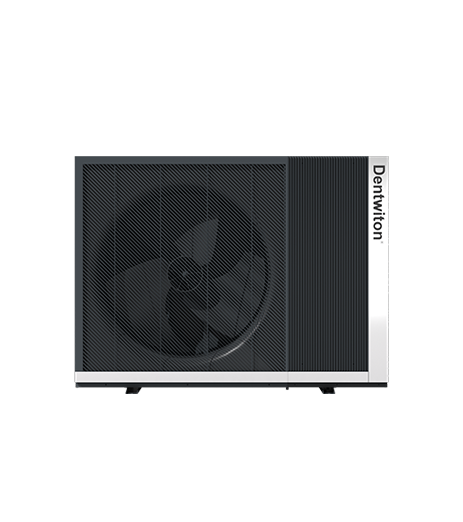
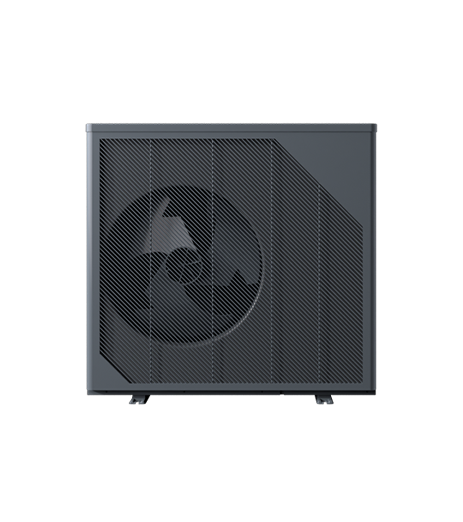
Dentwiton specialises in air-to-water and ground source heat pumps. Our range covers inverter residential models from 6kW to 80kW, including R290 and R32 split and monobloc units.

 Add:8F, Xinghe Business Tower, 89 Jiefang Road, Hangzhou, Zhejiang, China